Dear Legal Writer: There’s 1 right way & 9 wrong ways to say something CAUSED something in legal analysis.
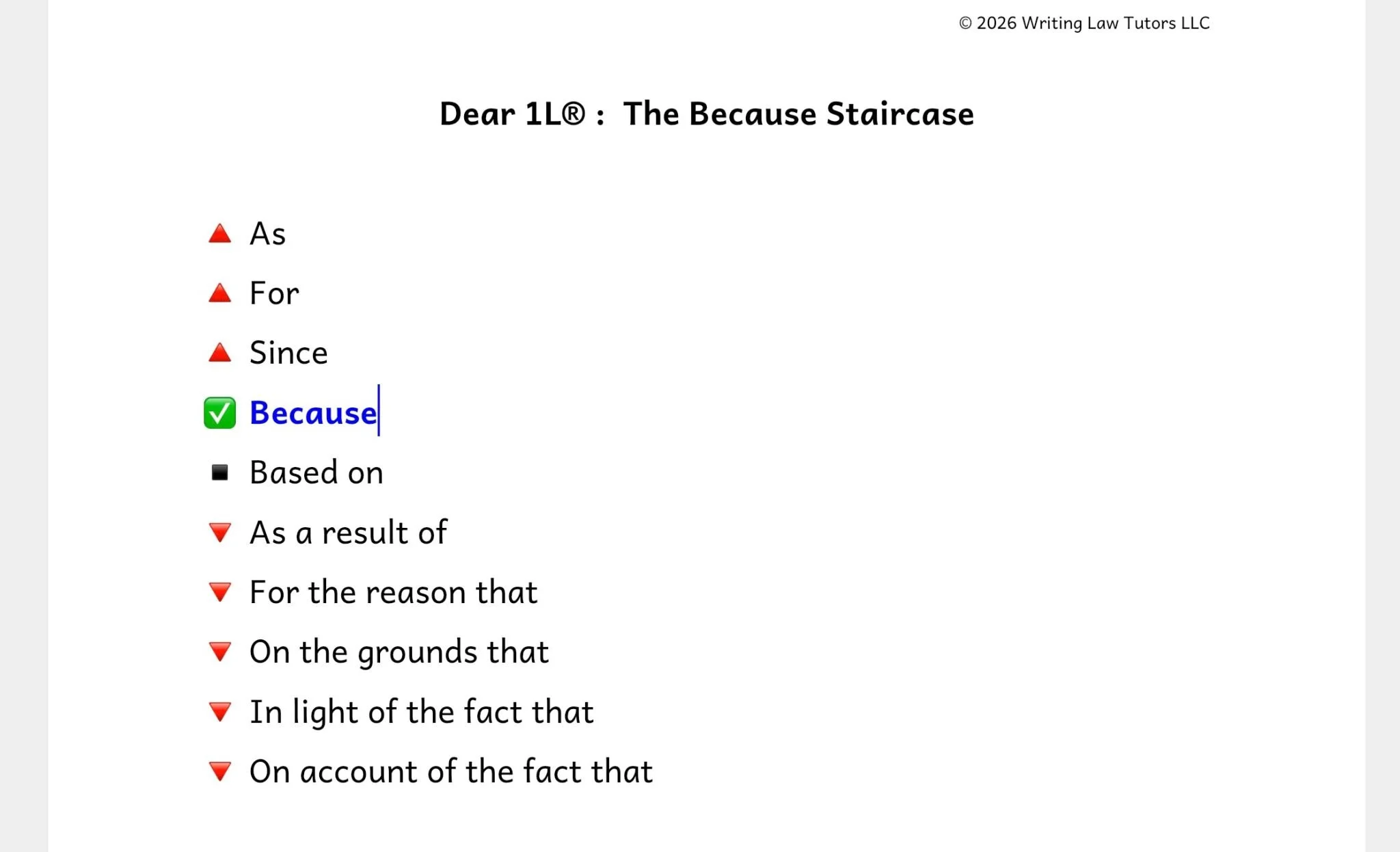
See if you can spot the best choice:
🔺 As
🔺 For
🔺 Since
✅ Because
▪️ Based on
🔻 As a result of
🔻 For the reason that
🔻 On the grounds that
🔻 In light of the fact that
🔻 On account of the fact that
Notice how the options grow longer and more complex as you go down? Well there’s one clue for which options are NOT the best.
Here’s my full analysis:
🔺 The 3 short words above the line (as, for, since) are too vague for legal analysis.
—True, they may work in some Intros & Facts sections, depending on what you intend when you use them; they can add nuance and texture.
But for your Argument section, don’t use them to express causation. Each one means too many other things, making it ambiguous without more context.
🔻 The 5 long terms at the bottom fare no better.
—Sure, you might prefer them for flow in early sections, but never forget that when you do, you are adding CLUTTER.
And you should always avoid them in your Argument section because they beat around the bush when you really should just say “because.”
For analysis, “because” is best.
▪️ What about “based on”?
It’s not much longer than “because,” and we see it often in legal writing, so it can trip folks up. The key things to know are that:
(1) in the law, we reserve “based on” for statutory language to describe the prohibited grounds for action, and
(2) legal scholars reject “based on” as a synonym for “because” in analytical prose.
👉 The Bottom Line is: For analysis,“because” is best.
So next time you’re tempted to reach for a coy or fancy workaround, please pause, recall my Because Staircase, and find the sweet spot:
It is “because.”
💌 Amanda
#DearLegalWriter
P.S. One way to make sure you’re giving the court a reason for your conclusions is to START each of your conclusion sentences with the word “Because.”
E.g., “Because the plaintiff admits the statement was true, she cannot sustain a defamation claim.”
📫 Do you start your sentences with “Because”?