
Kidding. Sort of.
The truth is that lawyers actually use Latin rules like “expressio unius” every day—often without even thinking about it.
We use them to help us interpret constitutions, statutes, judge’s opinions, and all other forms of legal writing.
Because of that, we MUST take the canons into account when writing.
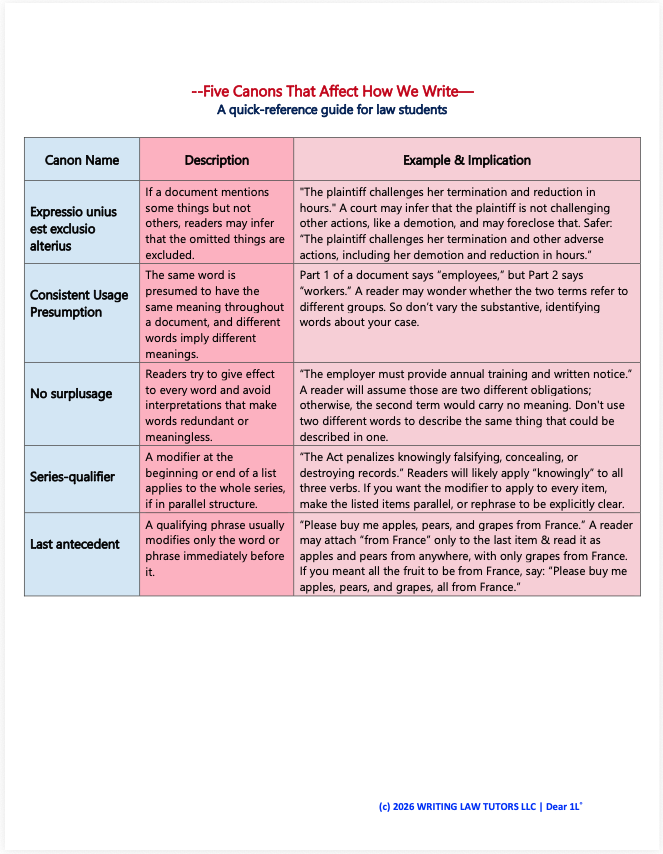
I made a one-page cheat sheet of the FIVE canons that I consider most often.
I thought it might fit on your legal-writing pinboard.
—What’s that you say? You don’t have a legal-writing pinboard?
Well, why not start one today--(I've got more helpful stuff coming up that you'll want to keep handy.)
💌 Amanda
#Dear1L
P.S. A “canon” is a rule of interpretation that a judge will rely on when reading, not a “cannon” that could blast your writing into pieces (though it can feel that way).
Also:
-No canon is absolute.
-More than one may apply.
-Courts use them together.
-One canon can pull against another.
✏️ My favorite canon is “expressio unius.” What’s yours?
Dear 1L, A super quick way to sound like a lawyer is to pretend you’ve never heard of English and say “expressio unius est exclusio alterius.”
Previous
Previous
Dear Legal Writer, One small edit that instantly upgrades a brief: move “thus” and “therefore” to the middle of your sentences.
Next
Next